Fact-Checked & Clinical Guidelines Aligned
Content rigorously reviewed to ensure alignment with clinical guidelines published by the National Sleep Foundation (NSF) and the American Academy of Sleep Medicine (AASM).
Why Does It Take Me Hours to Sleep?
Struggling to fall asleep for hours? Learn the real reasons behind long sleep onset — from stress to caffeine — and discover 7 science-backed fixes to sleep faster tonight.
Why Does It Take Me Hours to Sleep?
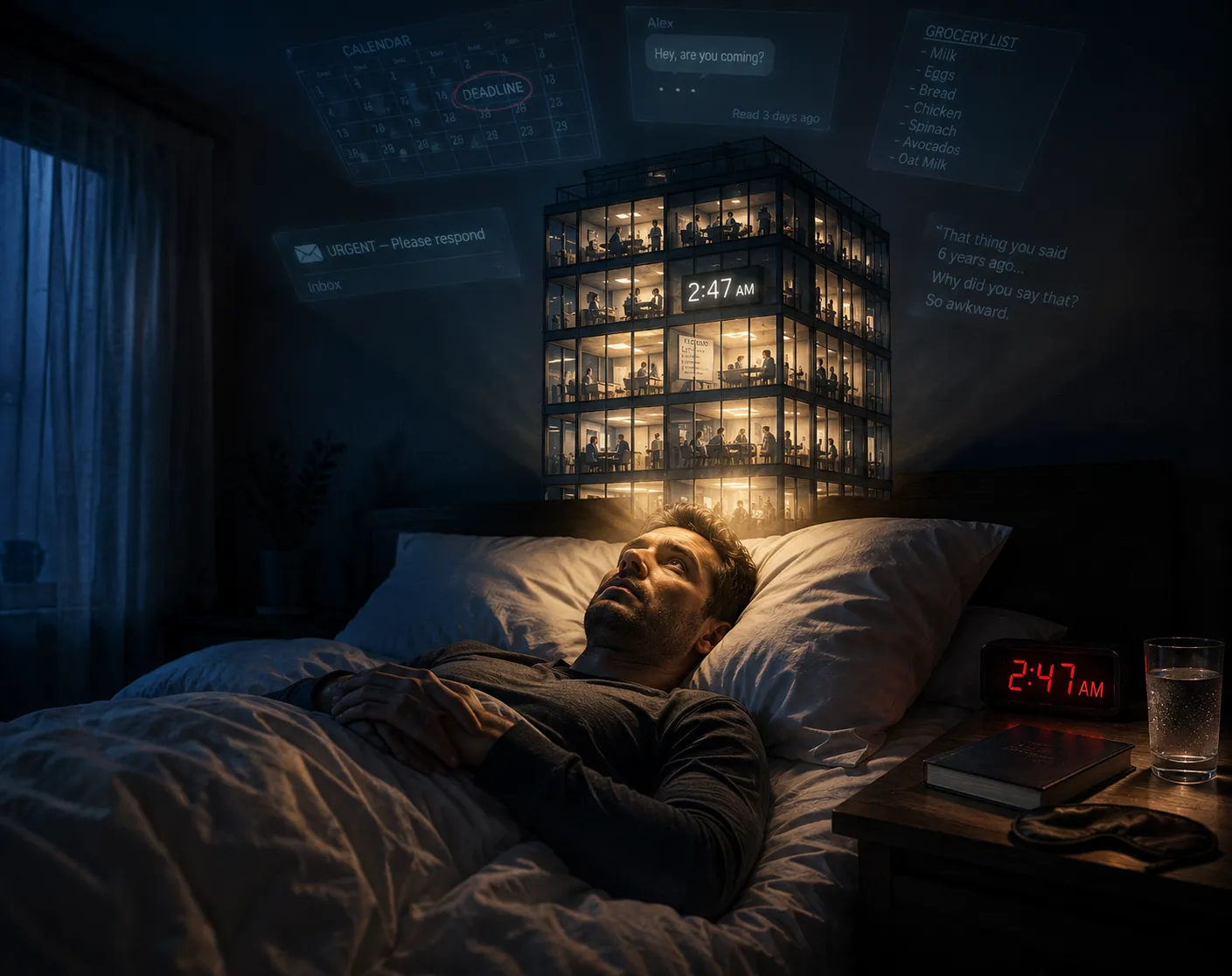
You're lying in bed. The lights are off. You're exhausted. But your brain just won't stop. Sound familiar?
If it regularly takes you one, two, or even three hours to fall asleep, you're not alone — and you're not broken. But it is a sign your body is trying to tell you something.
In this guide, we break down exactly why it happens, what science says about it, and 7 proven ways to fix it tonight.
Insight: Medically, the time it takes you to fall asleep is called sleep latency. A healthy adult should fall asleep in 10 to 20 minutes. Anything beyond 45 minutes, three or more nights a week, is considered clinical sleep-onset insomnia.
What Is Normal Sleep Latency?
Most healthy adults fall asleep within 10 to 20 minutes of lying down. If you're dropping off in under 5 minutes, that's actually a warning sign of sleep deprivation — your body is too exhausted. But if you're still awake after 30 minutes, something is interfering with your natural sleep process.
According to Johns Hopkins Medicine, if you find yourself tossing and turning past the 20–30 minute mark, the best move is to actually get up, do something relaxing like reading, and return to bed when you feel sleepy. Lying in bed frustrated only trains your brain to associate the bed with wakefulness — the opposite of what you want.
6 Real Reasons It Takes You Hours to Fall Asleep
The NHS recommends going to bed and waking up at the same time every day, even on weekends.
1. Stress and Anxiety Are Keeping Your Brain Wired
This is the number one culprit. When you're stressed or anxious, your body releases cortisol and adrenaline — hormones designed to keep you alert and ready for action. That's great during the day. At night, it's a disaster.
Your nervous system enters what's called fight-or-flight mode, making sleep almost impossible no matter how tired you feel. Worries about work, relationships, or tomorrow's to-do list keep firing in your brain right when you need silence.
Insight: The NHS notes that anxiety, worry, and stress are among the most common reasons people lie awake for hours — even when their body is physically exhausted.
2. Caffeine Is Still in Your System
That afternoon coffee might be costing you your sleep. Caffeine has a half-life of about 5 to 6 hours, meaning half of it is still active in your bloodstream hours later.
Research cited by Johns Hopkins Medicine found that consuming caffeine even 6 hours before bedtime reduced total sleep time by more than an hour. If you had a coffee at 4 PM, its effects can still be active at 10 PM.
Insight: Switch your last caffeine intake to before 2 PM. Swap your evening drink for herbal tea — chamomile works especially well for winding down.
3. Screens Are Blocking Your Melatonin
Scrolling your phone in bed feels relaxing, but it's quietly sabotaging your sleep. The blue light from screens suppresses melatonin — your body's natural sleep hormone. Without melatonin rising in the evening, your brain doesn't get the signal that it's time to sleep.
Johns Hopkins sleep expert Dr. Rachel Salas recommends no electronics at least 30 minutes before bed. Darkness in the evening is what helps your brain shift into sleep mode.
4. Your Sleep Schedule Is Irregular
Your body runs on an internal clock called the circadian rhythm. When you go to bed at midnight one night and 3 AM the next, you confuse this clock — and it stops knowing when to prepare your body for sleep.
Insight: The NHS recommends going to bed and waking up at the same time every day, even on weekends. Consistency is the single most powerful sleep hygiene habit you can build.
5. Alcohol Is Disrupting Your Sleep Architecture
Many people use a drink before bed to "relax" and fall asleep faster. It may work initially — but alcohol actually reduces the quality of your sleep significantly.
According to Johns Hopkins Medicine, while alcohol may help you drift off sooner, it reduces the time spent in deeper sleep stages that affect memory, concentration, and even physical coordination. You wake up feeling unrefreshed even after a full night.
6. An Underlying Condition You Haven't Identified
Sometimes the issue isn't habits — it's health. Conditions like sleep apnea, restless legs syndrome, or acid reflux (GERD) can make it difficult to fall or stay asleep, often without you even realizing the connection.
If you snore loudly, gasp at night, feel an uncontrollable urge to move your legs in bed, or have frequent heartburn — talk to your doctor. These are treatable conditions.
7 Science-Backed Ways to Fall Asleep Faster
The NHS recommends going to bed and waking up at the same time every day.
1. Set a Fixed Bedtime and Wake Time
Pick a time and stick to it — every single day. Your circadian rhythm will sync up within a week or two, and you'll start feeling sleepy naturally at the right time.
2. Build a 30-Minute Wind-Down Routine
Your brain needs a transition from "go mode" to "sleep mode." Spend 30 minutes before bed doing something calming — reading, light stretching, or a warm shower. Avoid stressful conversations or work during this window.
3. Cut Caffeine After 2 PM
Give your body enough time to metabolize caffeine before bed. Switch to herbal tea or water in the afternoon and evening.
4. Keep Your Bedroom Dark, Cool, and Quiet
Your sleep environment matters enormously. A room that's too bright, noisy, or warm can keep you awake. Aim for around 65–68°F (18–20°C), use blackout curtains, and consider a white noise machine if needed.
5. Ditch the Phone 30 Minutes Before Bed
Put your phone in another room — or at minimum, switch on night mode. Blue light is melatonin's enemy. Replace scrolling with a paperback book.
6. Get Out of Bed If You Can't Sleep
If you're lying awake for more than 20–30 minutes, get up. Go to another room. Read or listen to something calm until you feel sleepy. This prevents your brain from learning to associate your bed with sleeplessness.
7. Consider CBT-I for Chronic Insomnia
If nothing else works, Cognitive Behavioral Therapy for Insomnia (CBT-I) is the gold standard treatment. Research from Johns Hopkins shows CBT-I is more effective than sleeping pills at helping people fall asleep faster — and the results last for years without medication.
Use Our Free Sleep Calculator
Not sure when you should be going to bed? Our Sleep Calculator tells you the perfect bedtime based on your wake-up time and natural 90-minute sleep cycles — so you wake up refreshed, not groggy.
👉 Calculate Your Perfect Bedtime →
FAQ
1. Set a Fixed Bedtime and Wake Time↓
Pick a time and stick to it — **every single day**. Your circadian rhythm will sync up within a week or two, and you'll start feeling sleepy naturally at the right time.2. Build a 30-Minute Wind-Down Routine↓
Your brain needs a transition from "go mode" to "sleep mode." Spend 30 minutes before bed doing something calming — reading, light stretching, or a warm shower. Avoid stressful conversations or work during this window.3. Cut Caffeine After 2 PM↓
Give your body enough time to metabolize caffeine before bed. Switch to herbal tea or water in the afternoon and evening.4. Keep Your Bedroom Dark, Cool, and Quiet↓
Your sleep environment matters enormously. A room that's too bright, noisy, or warm can keep you awake. Aim for **around 65–68°F (18–20°C)**, use blackout curtains, and consider a white noise machine if needed.5. Ditch the Phone 30 Minutes Before Bed↓
Put your phone in another room — or at minimum, switch on night mode. Blue light is melatonin's enemy. Replace scrolling with a paperback book.6. Get Out of Bed If You Can't Sleep↓
If you're lying awake for more than 20–30 minutes, **get up**. Go to another room. Read or listen to something calm until you feel sleepy. This prevents your brain from learning to associate your bed with sleeplessness.7. Consider CBT-I for Chronic Insomnia↓
If nothing else works, **Cognitive Behavioral Therapy for Insomnia (CBT-I)** is the gold standard treatment. Research from Johns Hopkins Medicine shows CBT-I is more effective than sleeping pills at helping people fall asleep faster — and the results last for years without medication.Insight: The NHS advises that if poor sleep is affecting your daily life or causing distress, speak to your GP. Short-term insomnia is common, but long-term sleep problems rarely resolve on their own without action.
Sources: NHS Every Mind Matters — Sleep Problems; Johns Hopkins Medicine — Seven Ways to Get a Healthier Night's Sleep
Calculate Your Perfect Sleep & Wake Times
Put this research into practice immediately. Our scientific calculators align your sleep with natural 90-minute REM cycles.
Related Articles
Why You Wake Up Tired Even After 8 Hours of Sleep
8 common hidden causes of morning fatigue — and exactly how to fix each one.
8 min read read →How to Fall Asleep Faster: 12 Science-Backed Tips
Reduce your sleep onset time from 30+ minutes to under 10 minutes with these evidence-based techniques.
7 min read read →How to Fix Your Sleep Schedule in 7 Days
A step-by-step protocol using anchor wake times, morning light, and sleep pressure to reset your schedule.
7 min read read →