Fact-Checked & Clinical Guidelines Aligned
Content rigorously reviewed to ensure alignment with clinical guidelines published by the National Sleep Foundation (NSF) and the American Academy of Sleep Medicine (AASM).
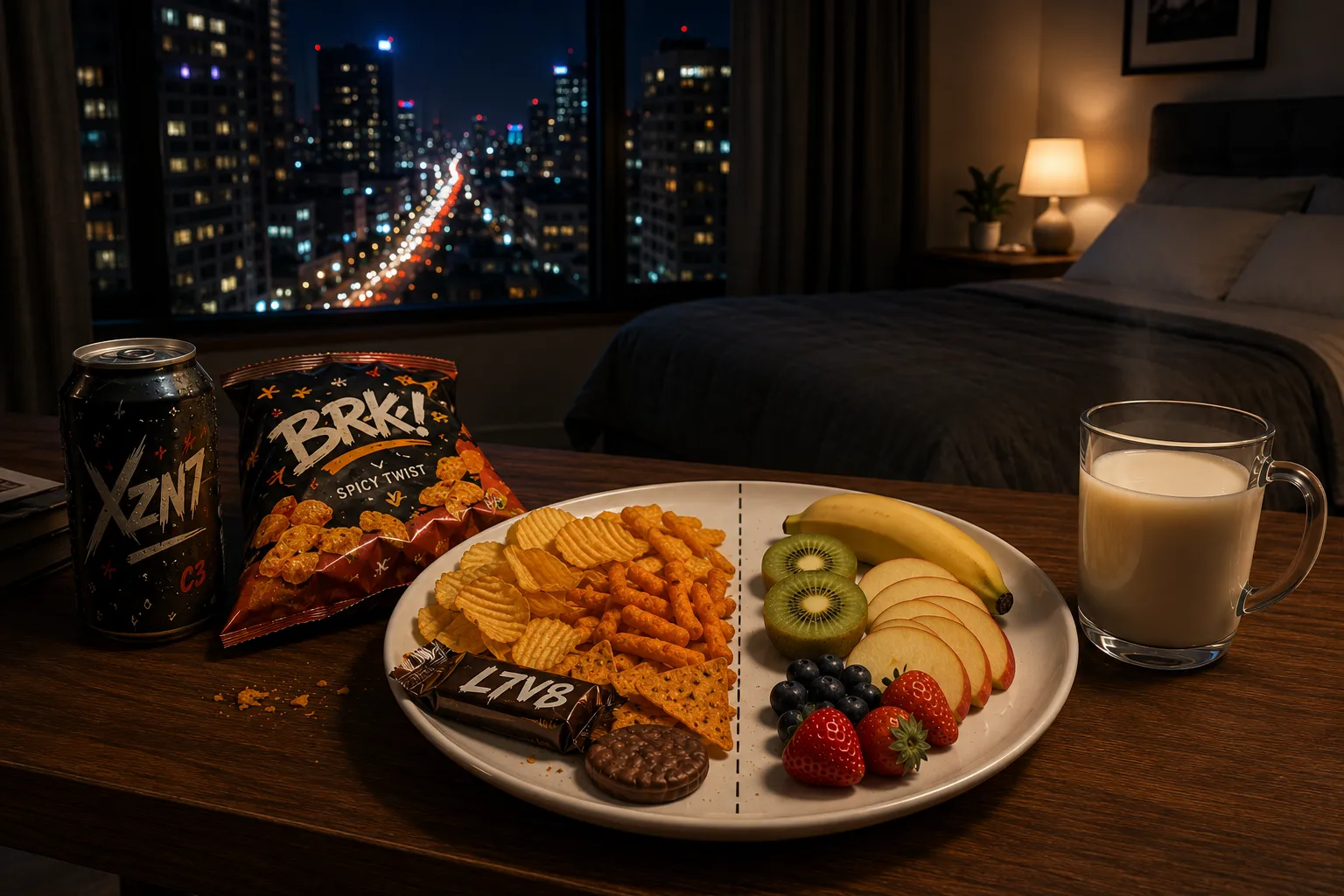
What not to eat before bed
Eating the wrong thing before bed fragments your sleep cycles and builds sleep debt you don’t see coming. Here’s exactly what to avoid — and what to eat instead

"Tell me what you eat, and I will tell you what you are." — Jean Anthelme Brillat-Savarin (who presumably went to bed at a reasonable hour)
You did everything right.
You went to bed at a sensible time. You put the phone down. The room was dark and cool. You were genuinely tired. And then — somewhere around 1 am — you woke up inexplicably, felt vaguely uncomfortable, and spent the next hour in that specific limbo between too awake to sleep and too tired to do anything useful.
The culprit wasn't stress. It wasn't your neighbor. It wasn't some mysterious sleep disorder.
It was the cheese.
Or the late pasta. Or the glass of wine you told yourself was helping you wind down. Or the "quick snack" that was three things and a handful of something directly from the bag.
What you eat in the hours before bed has a direct, measurable effect on your sleep quality — your ability to fall asleep, stay asleep, and wake up feeling like a person rather than a poorly assembled collection of someone's previous decisions.
Here's exactly what to avoid, why it matters, and what to eat instead.
Why Food Affects Sleep (The Short Version)
Your body needs to drop its core temperature by approximately 1–2°C to initiate and maintain deep sleep. Digestion generates heat. A large meal close to bedtime keeps your core temperature elevated past the window where sleep should naturally arrive — delaying sleep onset and reducing the quality of your first sleep cycle.
Beyond temperature: certain foods directly interfere with melatonin production, spike blood sugar in ways that cause mid-night crashes and wakings, elevate cortisol, or keep your digestive system working so hard that your body can't properly enter the slow-wave deep sleep it needs.
The result is lower sleep efficiency — more time in bed, less time actually sleeping — and compounding sleep debt that accumulates quietly across the week.
The Foods to Avoid Before Bed
1. Alcohol — The Most Convincing Liar in Your Kitchen
Alcohol is sleep's most convincing liar. It helps you fall asleep faster — genuinely — which feels like a win. But alcohol significantly suppresses REM sleep, fragments the second half of the night, raises core body temperature, and causes earlier-than-intended morning waking as blood alcohol levels drop.
The net result: you fall asleep quickly, sleep shallowly, wake at 3 am feeling sandpapered, and spend the morning convinced the problem was "just a bad night" rather than last night's wine.
This is particularly relevant if you're already struggling with waking up at 3 am — alcohol is one of the primary amplifiers of the pre-dawn cortisol rise that causes early waking.
The rule: Stop drinking at least 3 hours before bed — which maps directly onto the 3-3-3 rule for sleep covered separately. Three hours isn't always enough for alcohol to fully clear, but it significantly reduces the sleep disruption compared to drinking right up to bedtime.
2. Caffeine — The One You Already Know About and Still Ignore
Caffeine blocks adenosine receptors — the mechanism that builds sleep pressure throughout the day. It doesn't clear adenosine; it just stops you feeling it temporarily. With a half-life of 5–6 hours, a 4 pm coffee still has half its caffeine active at 10 pm.
Hidden caffeine sources most people forget:
- Dark chocolate (real caffeine — not a small amount)
- Green tea and black tea
- Some soft drinks
- Pre-workout supplements
- Certain headache medications
The 3-hour cutoff in the 3-3-3 rule is the minimum. For most adults, cutting caffeine by early afternoon is more realistic and more effective.
3. Heavy, High-Fat Meals — The Slow Burn Problem
A large, high-fat meal — a creamy pasta, a full takeaway, anything that sits heavily in your stomach — takes 3–4 hours to digest properly. During that time, your body is generating heat, your digestive system is working at full capacity, and your core temperature is staying elevated.
This directly interferes with the temperature drop required for deep slow-wave sleep — the most physically restorative stage of your sleep cycle.
The 3-hour gap between a substantial dinner and bedtime is not arbitrary — it's the minimum time needed for the heaviest digestion to complete and core temperature to return toward sleep-ready baseline.
4. Spicy Food — Heartburn's Business Partner
Spicy food causes two distinct problems at night. First, it raises core body temperature directly — capsaicin (the compound that makes chilli hot) has a genuine thermogenic effect. Second, lying horizontal after spicy food dramatically increases the risk of acid reflux and heartburn — both of which fragment sleep and reduce sleep efficiency measurably.
If you love spicy food and you're also someone who wakes in the night for no obvious reason: try moving the spicy meal to lunch for a week. The results are usually immediate and occasionally infuriating.
5. High-Sugar Foods — The Blood Sugar Rollercoaster
A high-sugar snack before bed — biscuits, sweets, sugary cereal, most "energy" bars — causes a blood sugar spike followed by a crash. That crash, arriving in the middle of the night, can trigger cortisol release as the body works to stabilise blood glucose. Cortisol is the stress hormone that drives alertness. Releasing it at 2 am is precisely as inconvenient as it sounds.
This is one of the more common undiagnosed causes of middle-of-the-night waking — particularly the "wake up at 3 am for no reason" experience that many people assume is stress or a sleep disorder when it's actually their 10 pm biscuit making its presence known.
6. Large Amounts of Liquid — The Midnight Interruption
Not food exactly — but worth including. Large fluid intake close to bedtime interrupts sleep through the obvious mechanism of needing to wake and use the bathroom. Even one full interruption during a sleep cycle deposits you mid-cycle and requires another 20–30 minutes to fall back into deep sleep.
Cut off large drinks 90 minutes before bed. A small glass of water on the nightstand for genuine thirst is fine — a litre of water at 10 pm is not.
7. Tyramine-Rich Foods — The One Nobody Talks About
Tyramine is an amino acid that stimulates the release of norepinephrine — a neurotransmitter that increases brain activity and alertness. High-tyramine foods eaten close to bedtime can delay sleep onset and increase night waking.
High-tyramine foods include:
- Aged cheeses (yes, the cheese really might be the culprit)
- Cured and processed meats
- Soy sauce and fermented foods
- Certain wines and beers
- Overripe fruits
This doesn't mean avoiding these foods entirely — just not as a late-night snack.
What to Eat Instead
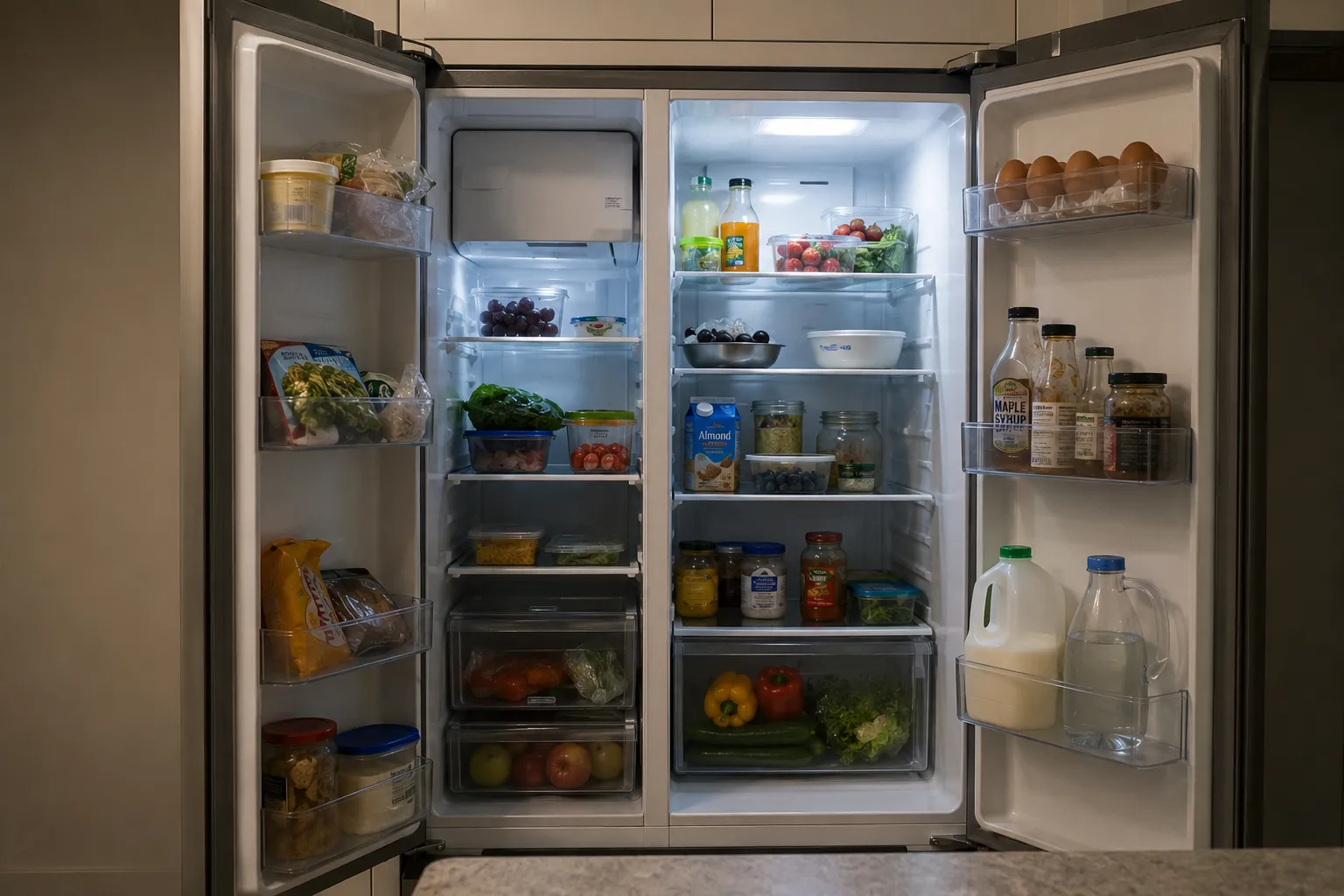
The goal isn't to go to bed hungry — that also disrupts sleep. The goal is a small, sleep-supportive snack if you need something.
Sleep-supportive options:
- A small bowl of oats — complex carbohydrates that stabilise blood sugar, plus naturally occurring melatonin precursors
- A banana — contains tryptophan (precursor to serotonin and melatonin) and magnesium (supports muscle relaxation)
- A small handful of almonds — magnesium and healthy fats, without the digestion-heavy load of a full meal
- Warm milk or chamomile tea — the warmth raises then drops core temperature slightly, supporting sleep onset; the tryptophan in milk is a genuine melatonin precursor
- Kiwi fruit — research published in the Asia Pacific Journal of Clinical Nutrition found that eating two kiwis an hour before bed improved sleep onset, duration, and efficiency
Small, tryptophan-containing, low-sugar, low-fat. That's the formula.
How This Connects to Your Sleep Timing
Even perfect food choices don't fully compensate for poor sleep timing. If you're eating well but still waking in the night or feeling unrefreshed, the issue may be when your alarm goes off relative to your sleep cycle — not just what you ate.
Waking mid-deep sleep produces sleep inertia regardless of diet. The sleep calculator works backwards from your wake-up time to find the bedtime that lands your alarm at a natural cycle endpoint — so you wake up at the right moment, not mid-cycle.
Food quality improves what happens inside those cycles. Cycle timing determines when and how you exit them. You need both.
If you're carrying sleep debt from a run of poor nights — whether food-related or otherwise — the sleep debt calculator shows you exactly how much you're carrying and how long it'll take to recover.
And if you're wondering whether a late-night eating habit is hitting your sleep efficiency score — it almost certainly is.
FAQ
How long before bed should I stop eating?↓
For a full meal — at least 3 hours. This gives your body enough time to complete the heaviest digestion, return core temperature toward baseline, and reduce acid reflux risk when lying down. A small, sleep-supportive snack (banana, small bowl of oats, handful of almonds) is fine within an hour of bed. The 3-hour rule applies to substantial meals, not all food. For more on pre-bed habits, see the full 3-3-3 rule for sleep.
Does eating before bed cause weight gain?↓
The relationship is more nuanced than "eating at night causes weight gain." Total caloric intake matters more than timing for most people. However, sleep deprivation caused by poor pre-bed food choices disrupts ghrelin and leptin — the hormones governing hunger and satiety — which increases appetite the following day, particularly for high-calorie foods. Poor sleep from bad eating habits creates a cycle that makes healthy eating harder the next day.
Is it okay to drink alcohol to help sleep?↓
No — alcohol is one of the most counterproductive sleep aids available. It reduces sleep onset time (which feels helpful) but suppresses REM sleep, fragments the second half of the night, and causes early waking. The net effect on sleep quality is negative even when the effect on falling asleep feels positive. For more on why 3 AM waking happens and how alcohol contributes, see how long until 3 AM.
Why does eating cheese before bed cause weird dreams?↓
Aged cheese is high in tyramine, which stimulates norepinephrine release and increases brain activity — potentially making sleep lighter and dreams more vivid or intense. The "cheese causes nightmares" claim is partially folk wisdom and partially real biochemistry. It's unlikely to cause nightmares specifically, but it can make sleep lighter and more dream-active than usual.
What is the best food to eat before bed?↓
Small amounts of tryptophan-containing foods — banana, warm milk, a small bowl of oats, a handful of almonds, or kiwi fruit. Research supports kiwi specifically: two kiwis eaten an hour before bed showed measurable improvements in sleep onset, duration, and efficiency. Keep portions small, fat content low, and sugar content minimal.
Does caffeine in the afternoon really affect sleep?↓
Yes — significantly. Caffeine has a half-life of 5–6 hours, meaning half the caffeine from a 4 pm coffee is still active at 10 pm. It delays sleep onset, reduces total sleep time, and reduces deep slow-wave sleep even when you don't feel that it's keeping you awake. Cutting caffeine by early afternoon is one of the highest-leverage sleep improvements most people can make. For more on pre-bed habits, see the 3-3-3 sleep rule.
The Bottom Line
What you eat before bed isn't just a comfort issue. It's a sleep architecture issue. It directly affects your sleep efficiency, your cycle quality, your sleep debt, and how you feel every morning.
The foods to cut: alcohol, caffeine, heavy fatty meals, spicy food, high-sugar snacks, large amounts of liquid, and tyramine-rich aged foods close to bedtime.
The foods to eat if you need something: small, tryptophan-rich, low sugar, low fat.
And once the food is sorted — make sure your timing is too. The free sleep calculator handles the maths of when to sleep so the food changes you're making land in properly timed, properly structured sleep cycles.
→ Find your ideal bedtime tonight at GetSleepCalculator.net — free, instant, no sign-up required
Sources: Caffeine half-life and sleep from Drake et al., Journal of Clinical Sleep Medicine, 2013. Alcohol and REM sleep suppression from Ebrahim et al., Alcoholism: Clinical and Experimental Research, 2013. Kiwi and sleep quality from Lin et al., Asia Pacific Journal of Clinical Nutrition, 2011. Tyramine and sleep from Sharpley et al., Psychopharmacology, 1994. Core body temperature and sleep onset from Raymann et al., Brain, 2008. Sleep recommendations from the American Academy of Sleep Medicine (AASM), 2015.
Calculate Your Perfect Sleep & Wake Times
Put this research into practice immediately. Our scientific calculators align your sleep with natural 90-minute REM cycles.
Related Articles
Sleep Efficiency Calculator: What Your Score Really Means
In bed for 8 hours but only sleeping 6? Calculate your sleep efficiency score, find out what's dragging it down, and fix it with simple, evidence-backed changes.
14 min read read →Sleep Debt Calculator: How Much Sleep Do You Actually Owe Yourself?
Running on 6 hours all week? Calculate your sleep debt and find out what it's actually costing you — plus the only evidence-backed way to genuinely pay it back.
14 min read read →Why You Need a Sleep Calculator (And Why Guessing Is Quietly Wrecking Your Sleep)
Still guessing your bedtime? A free sleep calculator tells you exactly when to sleep and wake up based on your cycles — no guesswork, no groggy mornings.
14 min read read →