

Fact-Checked & Clinical Guidelines Aligned
Content rigorously reviewed to ensure alignment with clinical guidelines published by the National Sleep Foundation (NSF) and the American Academy of Sleep Medicine (AASM).
Chemical Pregnancy & Insomnia: How Early Hormones Disrupt Sleep
What is a chemical pregnancy, and why is it destroying your sleep? Learn how early hCG and progesterone hormone spikes cause pregnancy insomnia and night sweats.
Let’s be real: your body doing things completely out of your control is exhausting.
When you’re dealing with the earliest stages of pregnancy, it feels like your hormones have entirely hijacked the steering wheel. And unfortunately, the very first casualty of this hostile hormonal takeover? Your sleep.
If you are tossing, turning, waking up drenched in sweat at 3 AM, or staring at the ceiling feeling wide awake despite being bone-tired, you aren't crazy. It’s biology. Let’s talk about exactly what’s happening in your body, why your sleep cycle is currently in shambles, and how to gently guide your circadian rhythm back to normal.
What is a Chemical Pregnancy?
First, let's address the term, because it sounds far more clinical and intimidating than it needs to.
A chemical pregnancy is simply a very early miscarriage that occurs within the first five weeks of pregnancy, shortly after the embryo implants. According to the Mayo Clinic, they are incredibly common, accounting for 50% to 75% of all miscarriages. Often, they happen so early that a woman might not even realize she was pregnant, mistaking the bleeding for a slightly late menstrual cycle. It’s called a "chemical" pregnancy because levels of hCG (human chorionic gonadotropin) are high enough to produce a positive result on a pregnancy test, but an ultrasound wouldn't yet be able to detect a gestational sac.
Experiencing this type of loss is emotionally taxing. It is completely valid to feel grief, confusion, or just profound exhaustion. While your mind is processing this, your body is also dealing with the chaotic aftermath of a massive hormonal surge and sudden crash.
The Hormone Rollercoaster: Why Your Sleep is Destroyed
To understand why you can't sleep, you have to understand the two main culprits: hCG and Progesterone.
Think of Progesterone like that one friend who means well but completely ruins the party. During early pregnancy, your progesterone levels skyrocket to help support the uterus.
Here is what that massive surge of progesterone does to your sleep architecture:
- The Daytime Zombie Effect: Progesterone acts as a natural sedative. It suppresses the central nervous system, which is why early pregnancy makes you feel like you could sleep for a thousand years.
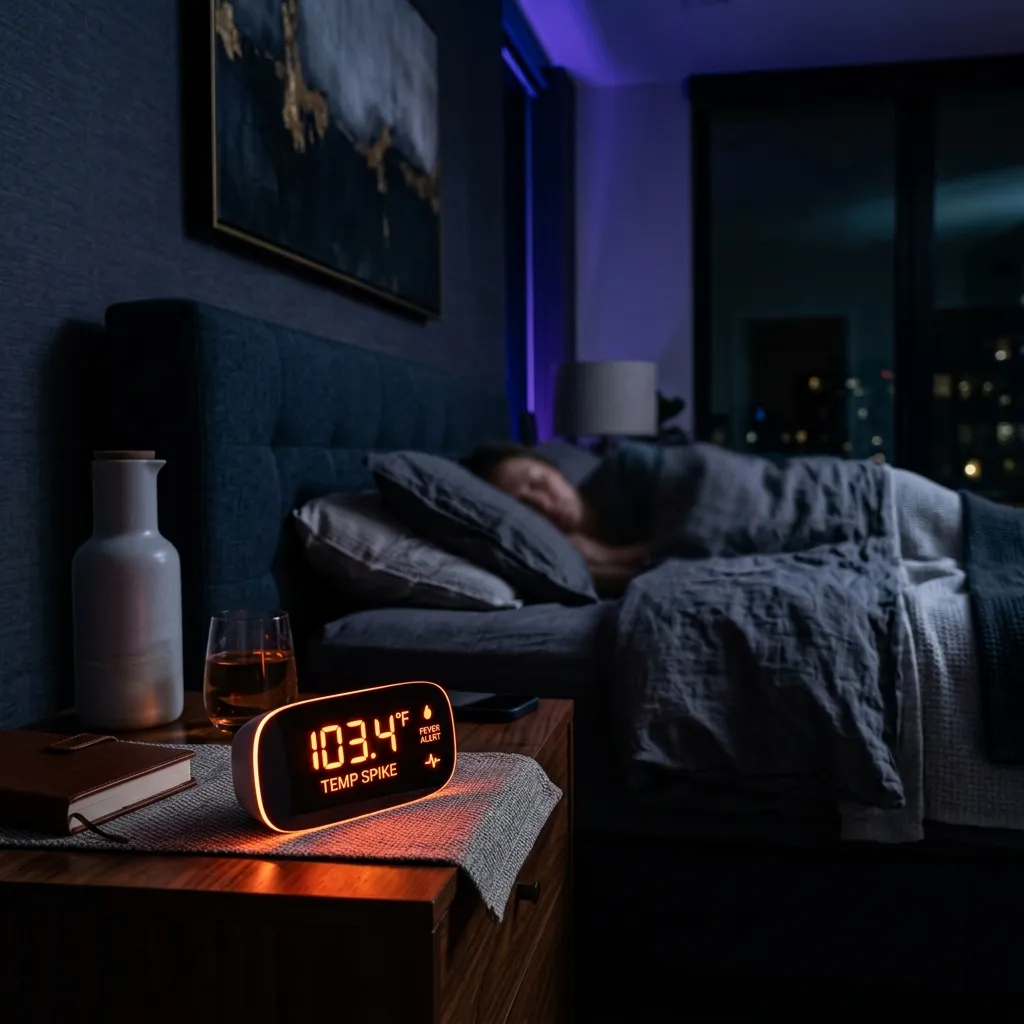
- The Midnight Oven: Paradoxically, while progesterone makes you sleepy during the day, it also raises your basal body temperature. Because your core body temperature must drop by 1 to 2 degrees for you to enter deep, restorative sleep, this hormonal heatwave leads to vivid dreams, night sweats, and frustrating 3 AM wake-ups.
You are exhausted all day, but boiling hot and restless at night.
The Post-Loss Insomnia Crash
If a chemical pregnancy occurs, those sky-high hormone levels suddenly plummet.
This rapid drop in progesterone confuses the brain and severely disrupts your circadian rhythm. Your body's internal clock is suddenly scrambling to figure out what time zone it's in. This abrupt withdrawal often triggers acute insomnia, making it incredibly difficult to fall asleep or stay asleep for several days to a few weeks following the loss.
4 Ways to Hack Your Circadian Rhythm and Get Your Sleep Back

Your hormones will stabilize, and your sleep architecture will return to normal. But while you wait for biology to balance out, here are 4 actionable, science-based ways to forcefully reset your circadian rhythm.
1. Attack the Hormone Sweats (Regulate Core Temperature)
Because your hormones are keeping your core temperature artificially high, you need to manually cool down your environment.
- Drop your bedroom temperature to 65°F (18°C).
- Take a warm (not hot) shower 90 minutes before bed. When you step out of the warm shower into the cool room, your body rapidly dumps heat, which biologically triggers the release of melatonin.
- Use breathable, moisture-wicking sheets (like bamboo or percale cotton) to combat night sweats.
2. Anchor Your Sleep Schedule
Going to bed extremely early to "catch up" on sleep actually makes insomnia worse because it fragments your sleep drive. Instead, you need to "Anchor" your sleep. Pick one strict wake-up time and stick to it every single day, even on weekends. Need help finding the best time? Use our Wake-Up Time Calculator to align your alarm with the end of a natural 90-minute sleep cycle so you don't wake up feeling groggy.
3. Manage Your Sleep Debt Carefully
When you are exhausted from insomnia, it is incredibly tempting to take a 4-hour nap in the middle of the afternoon. Don't do it. Massive daytime naps destroy your "sleep pressure" (the biological hunger for sleep), guaranteeing you will be wide awake again at 2 AM. If you must sleep during the day, use our Nap Duration Calculator to limit yourself to a 20-minute power nap. This will take the edge off the fatigue without ruining your nighttime sleep.
4. Practice Clinical Sleep Hygiene
If you are lying in bed for more than 20 minutes unable to sleep, get out of bed. Lying there frustrated trains your brain to associate your bed with anxiety. Read a book in dim light until you feel genuinely drowsy, then return to bed. For more comprehensive guidelines on sleep hygiene, check out the recommendations from the National Sleep Foundation.
Frequently Asked Questions
Can a chemical pregnancy cause insomnia?↓
Yes. The rapid fluctuation of hormones—specifically the sudden drop in progesterone following a chemical pregnancy—can severely disrupt your circadian rhythm. This abrupt withdrawal often leads to acute insomnia, night sweats, and highly fragmented sleep.
How long does insomnia last after an early miscarriage?↓
For most women, sleep architecture returns to normal within a few days to two weeks as hormone levels (hCG and progesterone) stabilize back to their baseline. Practicing strict sleep hygiene and anchoring your wake-up time can help accelerate this recovery process.
Why do I have night sweats during a chemical pregnancy?↓
Night sweats are primarily caused by the initial surge of progesterone, which raises your basal body temperature. When those hormone levels rapidly drop during a chemical pregnancy, the sudden temperature fluctuation confuses your body's internal thermostat, leading to heavy sweating as it desperately tries to regulate itself during deep sleep.
Is it safe to take melatonin for early pregnancy insomnia?↓
While melatonin is a naturally occurring hormone, it is generally not recommended to take over-the-counter melatonin supplements during pregnancy or immediately following a miscarriage without explicit approval from your OB-GYN. Instead, focus on regulating your room temperature and morning light exposure to naturally trigger your body's own melatonin production.
Be gentle with yourself right now. Your body has been through a significant hormonal shift, and it takes time to recalibrate. Your sleep will return.
Important Medical Disclaimer: This article is for informational and educational purposes only and does not constitute medical advice. If you are experiencing symptoms of a chemical pregnancy, severe pain, heavy bleeding, or chronic insomnia that lasts longer than a few weeks, please consult a healthcare professional, such as an OB-GYN or a board-certified sleep specialist.
Calculate Your Perfect Sleep & Wake Times
Put this research into practice immediately. Our scientific calculators align your sleep with natural 90-minute REM cycles.
Related Articles
Why Sleep Is Important for Health: 10 Science-Backed Reasons
Sleep affects your brain, heart, immune system, weight, and mental health. Discover 10 proven reasons why sleep is essential for health — backed by NSF, CDC, and AASM research.
7 min read read →how long can a human go without sleep?
Wondering if you can survive 7 days without sleep? Discover the extreme physical and psychological stages of severe sleep deprivation and what happens to your body.
4 min read read →Sleep Calculator: How Many Hours of Sleep Do You Really Need?
Find out exactly how many hours of sleep you need by age. Use our free sleep calculator to get your perfect bedtime and wake-up time — backed by NHS guidelines.
9 min read read →