
Fact-Checked & Clinical Guidelines Aligned
Content rigorously reviewed to ensure alignment with clinical guidelines published by the National Sleep Foundation (NSF) and the American Academy of Sleep Medicine (AASM).
How to Fall Asleep in 2 Minute
Fall asleep in 2 minutes? Statistically unlikely. But these science-backed techniques — used by the US Navy and sleep researchers — will get you closer than anything else you've tried. Here's exactly how.
How to Fall Asleep in 2 Minutes: The Tricks That Actually Work (For People Who Are Definitely Not Going to Sleep in 2 Minutes)
"People who say they sleep like a baby usually don't have one." — Leo J. Burke
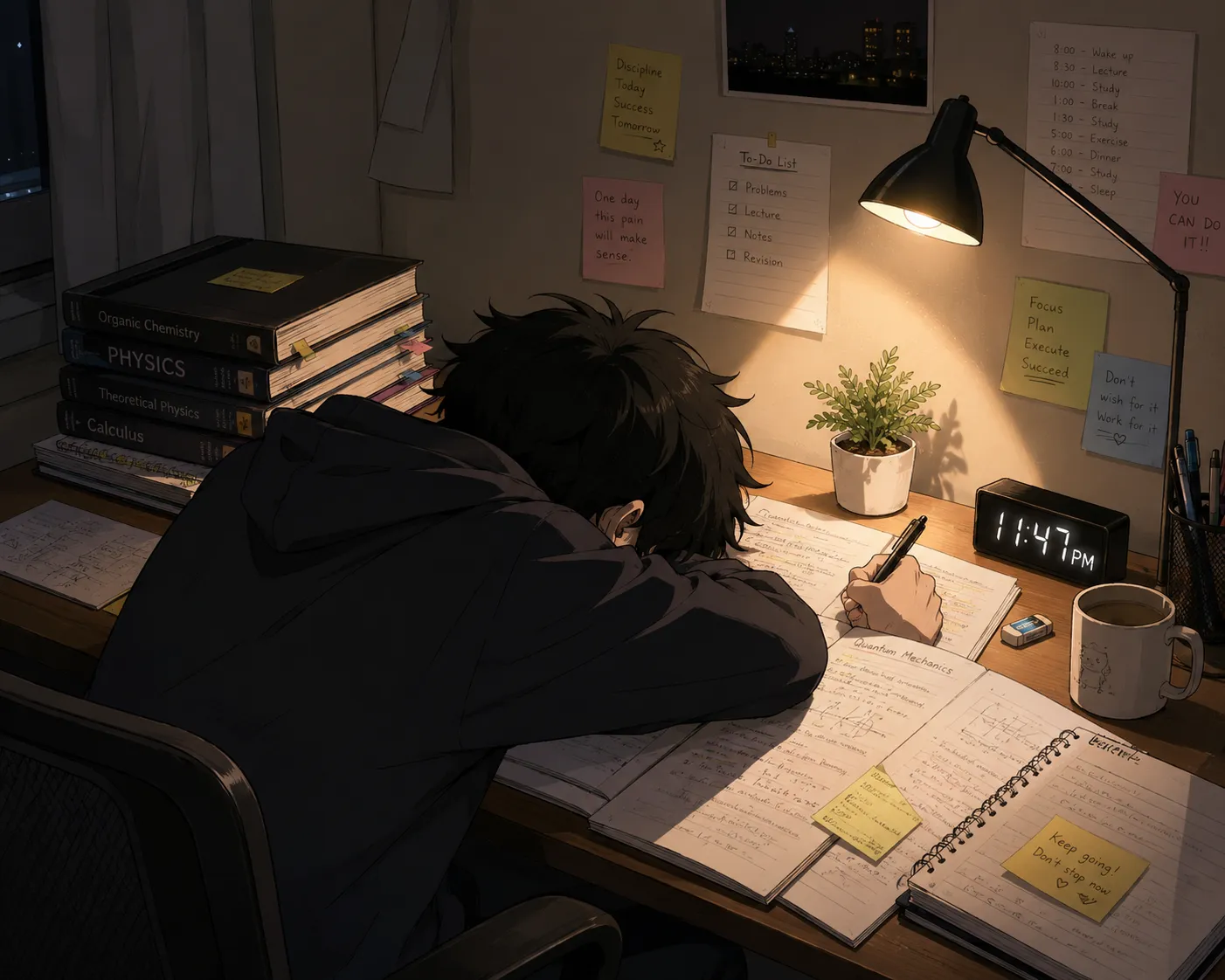
So. You're lying in bed.
You've been lying in bed for — let's check — 47 minutes. The ceiling has not changed. Your thoughts have visited seventeen unrelated topics, circled back to something you said at a work meeting in 2019, briefly considered whether penguins have knees (they do, for the record), and are now firmly settled on the question of whether you left the oven on.
You didn't leave the oven on.
And yet.
In a moment of genuine optimism — or possibly desperation — you picked up your phone and searched "how to fall asleep in 2 minutes." Which is, let's be honest with each other, a spectacularly bold thing to do at 1:17 am. You are using a device that emits sleep-disrupting blue light, in the dark, to search for ways to fall asleep faster. Your brain is fully illuminated. You are reading. You are engaged. You are the opposite of asleep.
But here's the thing: the techniques in this post are real. They are used by the US military, backed by sleep researchers, and genuinely effective — not in exactly two minutes for most people, but in a timeframe that will feel miraculous compared to the current situation.
Put the phone down after this. Actually put it down. And try what follows.
Where "2 Minutes" Actually Comes From
The claim isn't invented. It comes from a method documented in the 1981 book Relax and Win: Championship Performance by Lloyd Bud Winter — a trainer who worked with US Navy pre-flight school pilots who needed to sleep in stressful, noisy environments.
The Navy reportedly developed a sleep technique that, after six weeks of practice, allowed 96% of pilots to fall asleep within two minutes — even sitting upright, even with gunfire sounds playing in the background.
Two minutes. Sitting up. With fake gunfire.
So if you can't manage it lying in a comfortable bed in silence, don't feel too bad. Those pilots had been practising for six weeks. You're on attempt one, at 1:17 am, having just read about penguin knees.
According to Wikipedia's entry on sleep onset, the average time for a healthy adult to fall asleep — called sleep onset latency — is 10 to 20 minutes. Two minutes is at the extreme fast end of even healthy sleep. If you regularly fall asleep in under five minutes every night, that's actually a sign you're sleep-deprived, not a sign you're good at sleeping. Your body is grabbing sleep at the earliest possible opportunity because it's running a deficit.
So "fall asleep in 2 minutes" is: achievable with practice, faster for some than others, and not something to stress about if it takes you ten instead.
Stressing about not falling asleep is, in fact, the single most reliable way to not fall asleep. Welcome to the paradox at the heart of insomnia.
The Military Sleep Method: Step by Step
Here is the Navy technique. Read it once. Then put the phone down and try it.
Step 1: Relax your entire face. Every muscle. Forehead, eyebrows, eyelids, jaw, tongue. Let your tongue fall to the bottom of your mouth. Unclench your teeth — most people are clenching right now and have no idea. Soften around the eyes. This sounds simple. It is not simple. Do it anyway.
Step 2: Drop your shoulders. As low as they'll go. Then release your upper arms, then forearms, then hands. One side at a time if it helps. The goal is to feel heavy — like your arms are sinking into the mattress.
Step 3: Breathe out and relax your chest. On the exhale, let your chest collapse. Don't control the breath — just let it go.
Step 4: Relax your legs. Thighs first, then calves, then feet. The same heavy, sinking sensation.
Step 5: Clear your mind for 10 seconds. This is where most people struggle. Three options that work:
- Visualise a calm scene — lying in a canoe on a still lake. Nothing dramatic. Just water, sky, stillness.
- Visualise a dark room — sitting in a black velvet hammock in complete darkness. Nothing to see. Nothing to do.
- Repeat a phrase — "don't think, don't think, don't think" for ten seconds. It sounds ridiculous. It works by giving the verbal part of your brain something to do so it stops generating content.
That's it. That's the whole method. The reason it works is progressive muscle relaxation — systematically releasing physical tension signals to the nervous system that threat has passed and rest is safe. As Healthline explains, this technique directly activates the parasympathetic nervous system — the "rest and digest" mode that is the physiological opposite of the stress response keeping you awake.
The Rapid Blinking Trick (That Actually Has Science Behind It)
Here's one most sleep articles don't cover — and it works surprisingly well.
Blink rapidly for 30–60 seconds.
Genuinely. Fast blinks, one after another, until your eyes feel tired and heavy. Then close them and keep them closed.
The science: rapid blinking fatigues the eye muscles and the neural circuits responsible for keeping the eyes open. It also increases tear film distribution, which makes closing the eyes feel more comfortable and natural. The heaviness you feel after rapid blinking is real muscle fatigue — and your brain interprets that heaviness as a readiness-to-sleep signal.
It's also, objectively, a slightly absurd thing to do in the dark at 1 am. But it works. And at this point, you're not exactly in a position to be precious about dignity.
Stop the Thought Spiral — The Cognitive Shuffle
The main reason most people can't fall asleep isn't physical. It's mental. Specifically: the brain keeps generating coherent, narrative, problem-solving thoughts — which is the exact opposite of what the pre-sleep brain is supposed to do.
The pre-sleep brain should be generating random, fragmented, slightly illogical imagery — what sleep researchers call hypnagogic hallucinations. The transition into sleep involves the brain losing its narrative coherence. When you keep thinking in organised sentences about real problems, you're fighting that transition.
The fix is the Cognitive Shuffle — developed by Dr. Luc Beaudoin at Simon Fraser University and increasingly supported by sleep science.
Here's how it works:
- Pick a random, emotionally neutral word. "Banana." "Toaster." "Umbrella."
- Visualise one image for each letter of the word — as vivid and random as possible.
- B: a blue bucket floating in space
- A: an angry accountant on a skateboard
- N: a neon sign that says "noodles" for no reason
- Move to the next letter before the image becomes a story.
- When you run out of letters, pick a new word.
The randomness and irrelevance is the point. You're manually generating the fragmented, illogical imagery that precedes sleep — essentially faking the brain into the pre-sleep state until actual sleep follows.
It works because it gives your brain something to do that isn't solving real problems. The moment your brain starts making narrative sense of things, it's awake. Nonsense images of angry accountants on skateboards? That's basically dreaming. And dreaming means you're almost there.
The 4-7-8 Breathing Method
Developed by Dr. Andrew Weil and based on pranayama yoga breathing, this technique directly activates the parasympathetic nervous system through controlled breath patterns.
- Exhale completely through your mouth
- Close your mouth and inhale through your nose for 4 counts
- Hold your breath for 7 counts
- Exhale completely through your mouth for 8 counts
- Repeat 4 cycles
The extended exhale is the critical element. A longer exhale than inhale activates the vagus nerve and shifts the autonomic nervous system toward parasympathetic dominance — the physiological state required for sleep onset. The Sleep Foundation notes this technique is particularly effective for anxiety-driven sleep difficulty — where the nervous system is stuck in a stress response that won't disengage on its own.
What's Actually Keeping You Awake (And How the Calculator Helps)
Here's the part the "fall asleep in 2 minutes" searches miss: sometimes the problem isn't technique. It's timing.
If your body clock isn't ready for sleep yet — because you're going to bed before your natural melatonin rise, or because your circadian rhythm has drifted — no technique will work reliably. You can progressive-muscle-relax and cognitive-shuffle until sunrise and your brain will not cross into sleep because the biological signal hasn't arrived.
This is where sleep cycle timing matters as much as technique. Your sleep runs in 90-minute cycles — and going to bed at the wrong point relative to those cycles means you're trying to enter sleep mid-cycle, which is harder than entering at a natural boundary.
And if you've been lying awake for extended periods regularly, you're likely carrying sleep debt — a cumulative deficit that makes the falling-asleep experience harder, not easier, despite the tiredness.
The free sleep calculator finds the exact bedtime that aligns your sleep window with your body clock — so when you lie down, the biology is actually ready. The techniques above close the gap. The calculator gets you to the right starting line.
FAQ
Is it actually possible to fall asleep in 2 minutes?↓
With practice — yes, for some people. The US Navy method reportedly worked for 96% of pilots after six weeks of daily practice. For most adults without training, the realistic target is 10–20 minutes, which is the healthy average sleep onset latency. Falling asleep in under 5 minutes consistently is actually a sign of sleep deprivation, not sleep skill. The goal is 10–20 minutes — fast enough to feel easy, slow enough to mean you weren't dangerously under-slept.
Why can't I fall asleep even when I'm exhausted?↓
Paradoxical insomnia — feeling exhausted but unable to sleep — is usually driven by hyperarousal: the nervous system stuck in a stress response that won't disengage. Anxiety about not sleeping compounds it. The techniques in this post (progressive muscle relaxation, cognitive shuffle, 4-7-8 breathing) directly target the nervous system state preventing sleep onset. If this is a persistent pattern, CBT-I (cognitive behavioural therapy for insomnia) is the evidence-based treatment of choice.
Does the military sleep method really work?↓
The original claim comes from Lloyd Bud Winter's 1981 book on US Navy pilot training. The 96% success rate after six weeks is reported rather than independently peer-reviewed — but the underlying mechanism (progressive muscle relaxation) is extensively validated in sleep science. Most people who try it consistently report meaningful improvement in sleep onset time within 2–4 weeks. It doesn't work instantly for most people. It works with practice.
What is the cognitive shuffle and why does it help?↓
The cognitive shuffle is a technique developed by Dr. Luc Beaudoin that involves generating random, unconnected mental images — mimicking the fragmented, illogical imagery that naturally precedes sleep. By manually producing this randomness, you help transition the brain from organised, problem-solving thought (which keeps you awake) to the disorganised, pre-sleep state that leads to sleep onset. It's increasingly supported by sleep science and works best for people whose main sleep obstacle is an overactive, narrative-generating mind.
Should I try these techniques every night?↓
Yes — consistency is what makes them work. The military method took six weeks of daily practice before producing reliable two-minute sleep onset. Think of these techniques as skills, not switches. The more regularly you practise them at bedtime, the more reliably your nervous system associates them with sleep — eventually triggering sleep onset faster and faster over time.
The Bottom Line
You are not going to fall asleep in exactly two minutes tonight. Almost nobody does on their first attempt. What you are going to do is try the military method, blink rapidly like someone who has made peace with looking slightly unhinged in the dark, shuffle some nonsense images through your brain, breathe out for eight counts, and — somewhere in that process — probably fall asleep.
Not in two minutes. But faster than the 47-minute ceiling-staring session that brought you here.
Put the phone down. Start with the face muscles. Let the shoulders drop.
The penguins have knees. The oven is off. None of it needs solving tonight.
Sources: Progressive muscle relaxation and sleep onset from Jacobson, American Journal of Psychology, 1938. Sleep onset latency norms from Ohayon et al., Sleep Medicine Reviews, 2004. Cognitive shuffle method from Beaudoin, Simon Fraser University. 4-7-8 breathing and parasympathetic activation from Brown & Gerbarg, Journal of Alternative and Complementary Medicine, 2005. Recommended sleep durations from the American Academy of Sleep Medicine (AASM), 2015.
Calculate Your Perfect Sleep & Wake Times
Put this research into practice immediately. Our scientific calculators align your sleep with natural 90-minute REM cycles.
Related Articles
Why Sleep Is Important for Health: 10 Science-Backed Reasons
Sleep affects your brain, heart, immune system, weight, and mental health. Discover 10 proven reasons why sleep is essential for health — backed by NSF, CDC, and AASM research.
7 min read read →how long can a human go without sleep?
Wondering if you can survive 7 days without sleep? Discover the extreme physical and psychological stages of severe sleep deprivation and what happens to your body.
4 min read read →Sleep Calculator: How Many Hours of Sleep Do You Really Need?
Find out exactly how many hours of sleep you need by age. Use our free sleep calculator to get your perfect bedtime and wake-up time — backed by NHS guidelines.
9 min read read →